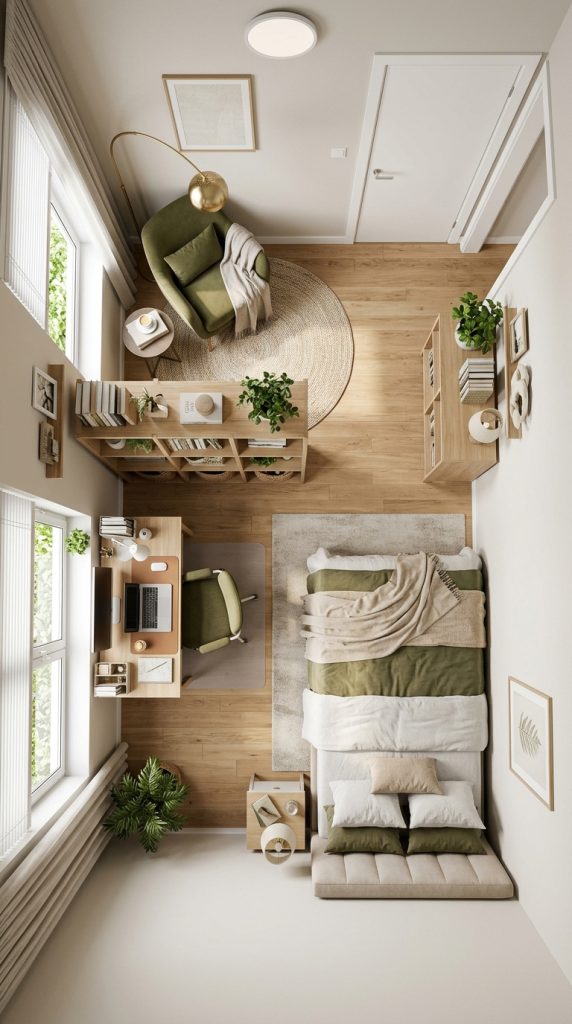
9. Divide the Room into Functional Zones
A room often feels disorganized when it is expected to support several activities without clearly defined areas.
A bedroom may also function as a study space, dressing area, exercise zone, and reading corner. Separating these purposes visually can make the room feel larger and more manageable.
No new furniture is required. Existing rugs, lamps, wall decor, shelves, and furniture placement can define each zone.
Who This Idea Suits Best
Room zoning is most useful for:
- Studio apartments
- Shared bedrooms
- Student rooms
- Home offices
- Multipurpose living rooms
- Small spaces with limited privacy
How to Create Functional Zones
First, list the activities performed in the room. Then assign each activity to a specific area.
Position the desk near the best available light. Keep study materials in that zone rather than spreading them throughout the room.
Use a rug to define a seating or reading area. Turn an existing shelf perpendicular to the wall to create a subtle divider, provided it is stable and safe.
A curtain, fabric panel, or folding screen already available in the home can separate a sleeping zone from a workspace.
Use different wall arrangements or lighting styles in each area while maintaining a shared color palette.
Styling Tips
Keep pathways open between zones. A divider should organize the room, not make movement difficult.
Use storage closest to the activity it supports. Books belong near the reading or study area, while clothing accessories belong near the dressing area.
Maintain one repeated material, color, or texture throughout all zones so the room still feels unified.
Benefits
- Improves organization
- Makes small rooms more functional
- Supports concentration and relaxation
- Reduces visual confusion
- Creates the feeling of multiple rooms
- Helps household members share spaces more comfortably