A few fruit flies hovering around the fruit bowl may not seem like a serious problem. However, within days, those tiny insects can multiply into an irritating swarm around your bananas, kitchen sink, trash can, recycling bin, or compost container.
Fruit flies reproduce quickly because they are attracted to moist, fermenting organic matter. Overripe fruit, spilled juice, empty beverage cans, damp cleaning cloths, and food residue inside drains can all provide the food and breeding conditions they need.
Fortunately, you do not always need an expensive insect spray or commercial pest-control product. A well-designed fruit fly trap DIY solution can attract and capture adult fruit flies using ingredients already available in most kitchens.
The most successful homemade traps combine three elements:
- A sweet or fermented scent that attracts fruit flies
- A container or sticky surface that prevents their escape
- Thorough cleaning that removes alternative food and breeding sources
This guide covers ten practical homemade fruit fly traps, explains who each method suits best, and provides expert tips for eliminating the infestation rather than merely catching a few visible flies.
Why Are Fruit Flies in Your Home?
Fruit flies are strongly attracted to fermenting sugar and organic material. They commonly gather around:
- Overripe bananas, peaches, grapes, tomatoes, or melons
- Fruit juice and soft-drink spills
- Open wine and beer bottles
- Kitchen trash cans
- Recycling containers
- Compost bins
- Garbage disposals
- Dirty drains
- Wet mops, sponges, and dishcloths
- Potatoes or onions stored in dark cabinets
- Food residue under appliances
Adult fruit flies are small, but their life cycle can progress quickly in warm conditions. This is why simply killing the flies you see may not solve the problem. Eggs or larvae may remain hidden in moist food residue.
For lasting control, use traps and sanitation together.
How to Identify Fruit Flies Correctly
Before making a trap, make sure you are dealing with fruit flies rather than another small flying insect.
Fruit Flies
Fruit flies are usually tan, brown, or yellowish and often have noticeable reddish eyes. They tend to hover around fruit, fermented drinks, trash, and food preparation areas.
Drain Flies
Drain flies have fuzzy, moth-like wings. They usually rest on walls near sinks, showers, floor drains, or sewage lines.
Fungus Gnats
Fungus gnats are slender, dark insects commonly found around houseplant soil. They are attracted to damp potting mix rather than fermenting fruit.
A vinegar-based homemade fruit fly trap may capture some other small insects, but identifying the source is essential. Fungus gnats require moisture management in plant soil, while drain flies require drain cleaning and plumbing inspection.

Quick Comparison of the Best DIY Fruit Fly Traps
| DIY Trap | Preparation Time | Difficulty | Maintenance | Best Location | Main Benefit |
|---|---|---|---|---|---|
| Apple cider vinegar and dish soap | 2 minutes | Very easy | Replace every 1–2 days | Kitchen counter | Fast and inexpensive |
| Paper funnel jar trap | 5 minutes | Easy | Refresh bait every 2 days | Fruit bowl area | Makes escape difficult |
| Plastic wrap trap | 5 minutes | Easy | Replace when cloudy or full | Pantry or counter | Neat and enclosed |
| Red wine trap | 1 minute | Very easy | Replace every 1–2 days | Beverage or dining area | Uses leftover wine |
| Beer trap | 2 minutes | Very easy | Replace daily | Recycling area | Strong fermented scent |
| Overripe fruit trap | 5 minutes | Easy | Discard daily | Near fruit storage | Highly attractive bait |
| Banana peel bag trap | 3 minutes | Easy | Empty frequently | Large infestation areas | Captures many flies at once |
| Sugar and yeast trap | 10 minutes | Moderate | Replace every 2 days | Kitchen or utility area | Useful without vinegar |
| Milk, sugar, and pepper trap | 15 minutes | Moderate | Replace daily | Kitchen counter | Traditional household method |
| DIY sticky bait card | 10 minutes | Moderate | Replace when covered | Near bins or windows | No liquid container needed |
1. Apple Cider Vinegar and Dish Soap Fruit Fly Trap
The apple cider vinegar method is one of the most popular fruit fly trap DIY options because it is simple, affordable, and quick to prepare.
Apple cider vinegar smells like fermenting fruit, which attracts adult fruit flies. Dish soap reduces the liquid’s surface tension, preventing flies from standing on the surface and escaping.
What You Need
- A small bowl, glass, or jar
- Two to four tablespoons of apple cider vinegar
- One or two drops of liquid dish soap
- Optional: one teaspoon of sugar
How to Make It
Pour the apple cider vinegar into the container. Add a small amount of dish soap and gently stir. Do not create excessive foam because a smooth liquid surface works better.
Place the bowl close to the area where fruit flies are most active.
Who It Suits Best
This method is best for anyone who wants a fast, low-cost solution for a small or moderate kitchen infestation.
Setup Tips
Use a shallow bowl when you want the scent to spread through a larger area. Place the trap close to the fruit bowl, sink, compost container, or trash can, but keep it away from uncovered food.
Benefits
- Requires only two common ingredients
- Takes less than five minutes to prepare
- Works without chemical insect spray
- Easy to monitor and replace
- Effective for catching adult fruit flies

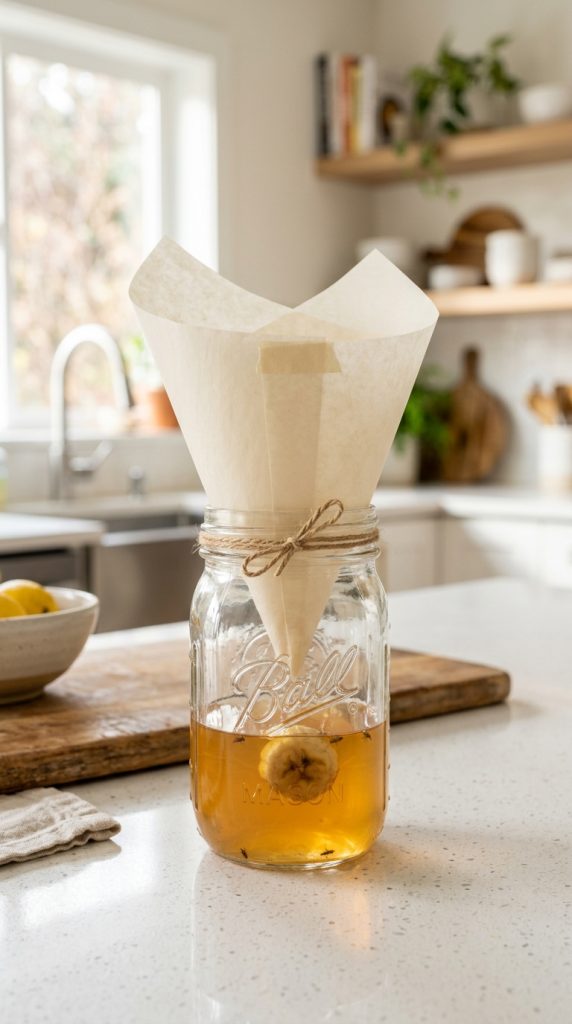
2. Paper Funnel Jar Trap
A paper funnel trap uses attractive bait inside a jar and a narrow funnel opening that makes it difficult for flies to leave.
What You Need
- A glass jar
- Apple cider vinegar, fruit juice, or a small piece of ripe fruit
- A sheet of paper
- Tape
How to Make It
Place the bait at the bottom of the jar. Roll the paper into a cone, leaving a small opening at the pointed end.
Insert the cone into the jar without allowing the narrow tip to touch the bait. Tape the paper so the funnel holds its shape and seal any large gaps around the rim.
Fruit flies follow the scent through the funnel opening. Once inside, many struggle to locate the narrow exit.
Who It Suits Best
The paper funnel design is ideal for households that prefer an enclosed trap with less risk of spilling liquid.
Setup Tips
Keep the funnel opening small, but not completely closed. An opening approximately the width of a drinking straw is usually sufficient.
For stronger attraction, combine apple cider vinegar with a small piece of banana.
Benefits
- Reduces the chance of flies escaping
- Contains captured insects inside the jar
- Can be made from recycled materials
- Works with several types of bait
- Easy to place behind small appliances
3. Plastic Wrap Fruit Fly Trap
The plastic wrap trap works similarly to the funnel design but uses tiny holes instead of a paper cone.
What You Need
- A cup, bowl, or jar
- Apple cider vinegar or overripe fruit
- Plastic wrap
- A rubber band
- A toothpick or skewer
How to Make It
Add the bait to the container. Cover the opening tightly with plastic wrap and secure it with a rubber band.
Use a toothpick to make several small holes in the plastic. The holes should be large enough for a fruit fly to enter but small enough to make escape difficult.
Who It Suits Best
This trap suits people who want a compact, tidy option for countertops, shelves, or pantry corners.
Setup Tips
Avoid creating too many holes. Five to eight small holes are usually enough for a small container.
Do not allow the plastic wrap to sag into the liquid. Stretching it tightly provides a more reliable entry surface.
Benefits
- Keeps the bait covered
- Reduces odors compared with an open bowl
- Minimizes accidental spills
- Easy to transport or reposition
- Suitable for homes with limited counter space

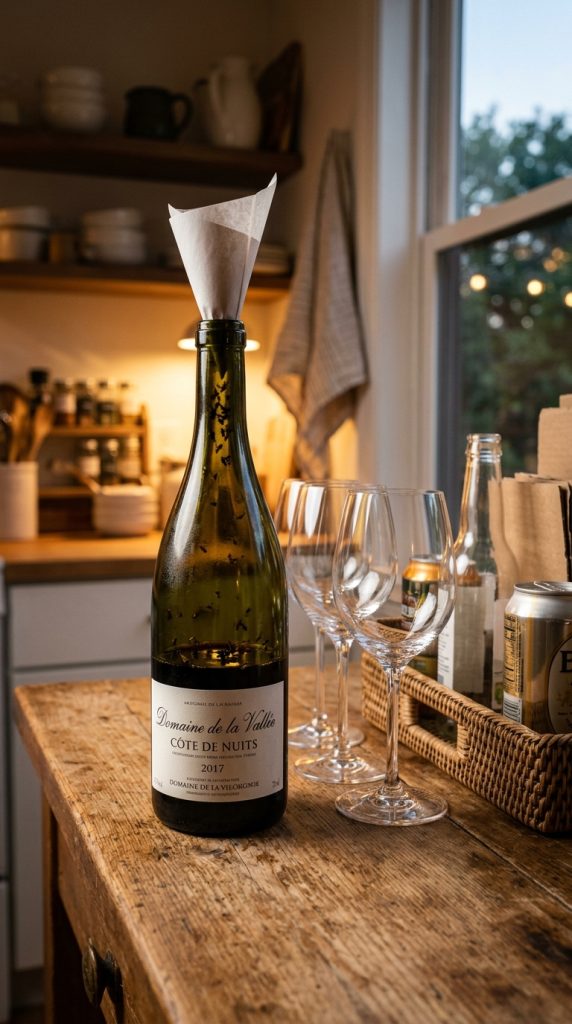
4. Leftover Red Wine Fruit Fly Trap
Fruit flies are attracted to the fermented aroma of wine. A small amount left in the bottom of a bottle can become a convenient DIY trap.
What You Need
- A wine bottle or narrow glass
- A small amount of red wine
- One drop of dish soap, if using a glass
How to Make It
Leave approximately two centimeters of wine in the bottom of the bottle. Place the bottle near the infestation.
The narrow neck helps restrict escape. When using a wide glass instead, add one drop of dish soap to the wine.
Who It Suits Best
This option is best for adults who already have leftover wine and want to reuse it instead of discarding it immediately.
Setup Tips
Red wine often has a strong fermented aroma, but white wine can also work. Do not place the trap where children or pets can reach it.
Dispose of the contents responsibly and wash the container thoroughly.
Benefits
- Reuses leftover wine
- Requires almost no preparation
- Provides a strong fermented scent
- A narrow bottle acts as a built-in funnel
- Useful near beverage storage or recycling bins
5. Beer Fruit Fly Trap
Like wine, beer contains fermented compounds that can attract fruit flies. It is particularly useful around bottles and cans awaiting recycling.
What You Need
- A small glass or jar
- A few tablespoons of beer
- One or two drops of dish soap
- Optional plastic wrap
How to Make It
Pour a small quantity of beer into a container and add a drop of dish soap. Leave the trap open or cover it with perforated plastic wrap.
Place it near the recycling bin or another area where flies gather.
Who It Suits Best
The beer trap works well for kitchens, garages, patios, or utility areas where empty beverage containers may be attracting fruit flies.
Setup Tips
Use fresh or leftover beer with a noticeable aroma. Rinse empty bottles and cans before placing them in the recycling bin so the trap remains the strongest attraction in the area.
Benefits
- Uses an inexpensive fermented bait
- Ideal for beverage-related infestations
- Takes only minutes to prepare
- Can be used in a covered or uncovered trap
- Helps reveal whether recycling residue is the main source

6. Overripe Fruit Funnel Trap
Fruit flies naturally seek soft, fermenting fruit as a place to feed and reproduce. Using a small piece as bait creates a powerful homemade trap.
What You Need
- A jar or disposable cup
- A small piece of overripe banana, peach, apple, or melon
- A paper funnel or perforated plastic wrap
How to Make It
Place the fruit in the bottom of the container. Add a few drops of vinegar or water to keep the bait moist.
Cover the container with a paper funnel or tightly stretched plastic wrap with small holes.
Who It Suits Best
This method suits people who do not have vinegar, wine, or beer available but have overripe fruit that would otherwise be discarded.
Setup Tips
Use only a small piece of fruit. Too much exposed fruit may become a breeding source instead of a controlled trap.
Empty the trap daily. Seal the used bait in a bag before placing it in an outdoor trash bin.
Benefits
- Uses natural, highly attractive bait
- Prevents food waste
- Requires no specialized ingredients
- Works with several container designs
- Effective near fruit storage areas

7. Banana Peel Bag Trap
A banana peel can attract a large number of fruit flies. A resealable plastic bag allows you to collect and remove them quickly.
What You Need
- A resealable plastic bag
- A small piece of banana peel or ripe banana
- Optional: a few drops of apple cider vinegar
How to Make It
Place the banana peel inside the open bag. Leave the bag partially open near the affected area.
Once several fruit flies enter, carefully close the bag and move it outdoors for disposal. Do not leave the open bag unattended for an extended period because the fruit may become an additional breeding location.
Who It Suits Best
This trap is useful when a visible group of fruit flies is concentrated around one location and you want to capture many at once.
Setup Tips
Check the bag every few hours. Closing it at the right time is essential because this trap does not automatically prevent escape.
Never leave it open overnight in a warm kitchen.
Benefits
- Extremely simple construction
- Captures multiple flies together
- Uses a common food scrap
- Requires no washing
- Convenient for short-term, targeted trapping

8. Sugar and Yeast Fruit Fly Trap
Yeast feeds on sugar and produces a fermented smell that can attract fruit flies. This method is helpful when apple cider vinegar is unavailable.
What You Need
- One small jar
- Half a cup of warm water
- One tablespoon of sugar
- A small pinch of active dry yeast
- One drop of dish soap
- A paper funnel or plastic wrap
How to Make It
Add warm—not boiling—water to the jar. Stir in the sugar, then sprinkle in the yeast. Allow the mixture to activate for several minutes.
Add one drop of dish soap and cover the container with a paper funnel or perforated plastic wrap.
Who It Suits Best
This trap is suitable for households that bake regularly and already have dry yeast in the pantry.
Setup Tips
Do not fill the jar too high because an active yeast mixture may foam. Leave enough empty space at the top.
Replace the mixture when it loses its fermented scent or becomes excessively cloudy.
Benefits
- Does not require vinegar or alcohol
- Produces a fresh fermented aroma
- Uses basic baking ingredients
- Works well inside an enclosed jar
- Can remain attractive for more than one day

9. Milk, Sugar, and Black Pepper Trap
The milk, sugar, and pepper method is a traditional household remedy. The sweet dairy mixture attracts flies, while the liquid surface traps them.
What You Need
- Half a cup of milk
- Two tablespoons of sugar
- One teaspoon of ground black pepper
- A shallow bowl
- A small saucepan
How to Make It
Combine the milk, sugar, and black pepper in a saucepan. Heat gently for several minutes while stirring.
Allow the mixture to cool completely before pouring it into a shallow bowl. Place it near the infestation.
Who It Suits Best
This method suits people who prefer a traditional recipe and do not mind preparing a fresh trap daily.
Setup Tips
Never leave milk-based bait at room temperature for long periods. Discard it at the end of the day, clean the bowl, and prepare a fresh batch when necessary.
Keep the trap away from pets and children.
Benefits
- Uses familiar kitchen ingredients
- Provides both sweetness and scent
- Works in a shallow open container
- Does not require vinegar
- Useful for testing alternative bait preferences

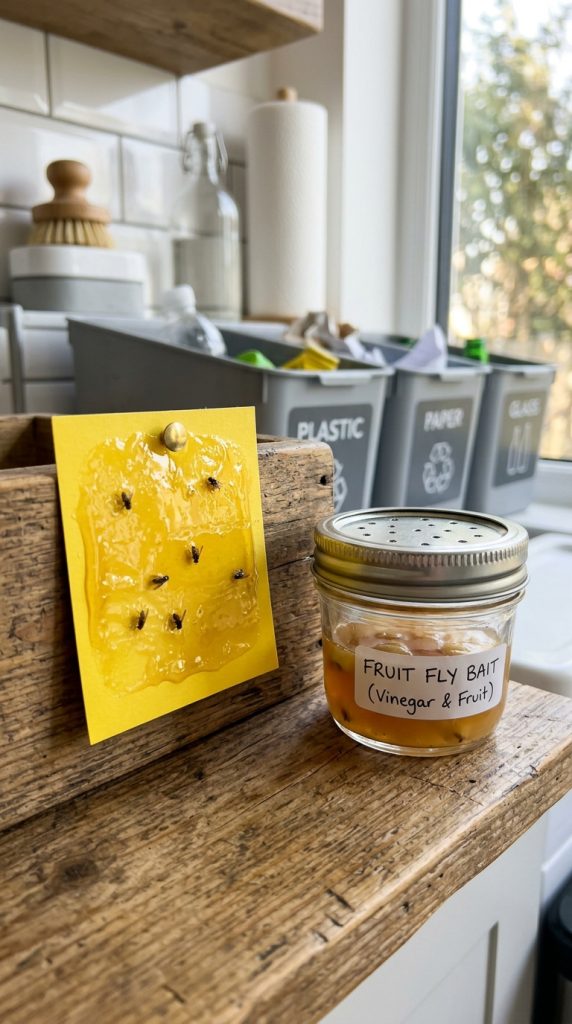
10. DIY Sticky Bait Card
A sticky card can capture fruit flies without an open bowl of liquid. Adding a small amount of fruit-scented bait nearby makes it more appealing.
What You Need
- A piece of yellow card or thick paper
- Honey, corn syrup, or petroleum jelly
- String or tape
- A small container of vinegar or fruit placed nearby
How to Make It
Cut the card into a small rectangle. Spread a thin layer of honey, corn syrup, or petroleum jelly over one side.
Position the card near a closed bait jar, trash area, or recycling container. Keep it away from food preparation surfaces.
Fruit flies attracted to the area may land on the sticky surface and become trapped.
Who It Suits Best
This option is useful for people who do not want an uncovered liquid trap or who need a solution for a narrow vertical space.
Setup Tips
Use only a thin sticky coating to avoid dripping. Tape the card securely to a wall, jar, or disposable support.
Do not hang sticky cards where they may catch hair, clothing, birds, or beneficial insects.
Benefits
- Does not require an open liquid container
- Fits into narrow areas
- Easy to monitor visually
- Can supplement vinegar-based traps
- Useful near windows and recycling stations
Which Fruit Fly Trap DIY Method Works Best?
For most household infestations, the apple cider vinegar and dish soap trap is the easiest starting point. It requires minimal preparation, produces a recognizable fermenting scent, and can be placed exactly where fruit flies are active.
However, the best trap depends on your situation:
- Choose an open vinegar trap for speed and simplicity.
- Choose a paper funnel jar when preventing escape is the priority.
- Choose plastic wrap when you want a covered, low-spill trap.
- Choose wine or beer when beverage residue is attracting the flies.
- Choose overripe fruit when natural bait is readily available.
- Choose a yeast trap when you do not have vinegar.
- Choose sticky cards as a supporting method rather than the only solution.
Using two trap styles at the same time can help identify the bait and location the flies prefer.
How to Get Rid of Fruit Flies at the Source
Traps capture adult insects, but sanitation interrupts the breeding cycle. For a more complete solution, follow these steps.
Remove Overripe Produce
Inspect all fruit and vegetables, including items stored in cupboards. Discard rotting produce in a sealed outdoor bin.
Refrigerate ripe fruit temporarily until the infestation is controlled.
Clean the Trash and Recycling Bins
Empty indoor bins frequently. Wash the inside, lid, rim, and surrounding floor with hot soapy water.
Rinse beverage cans, bottles, and food containers before recycling them.
Wipe Up Sweet Residue
Clean juice, syrup, wine, soda, and fruit residue immediately. Check beneath small appliances, cutting boards, storage containers, and floor mats.
Wash Drains Properly
Scrub the inside of the drain and garbage disposal opening to remove organic buildup. A stiff drain brush and an appropriate cleaning product are generally more effective than pouring a single household mixture into the drain.
Follow product labels and never combine incompatible cleaning chemicals.
Clean Damp Household Items
Wash or replace damp sponges, mop heads, dishcloths, and reusable cleaning pads. Allow them to dry completely between uses.
Inspect Hidden Food Sources
Look under the refrigerator, stove, cabinets, and trash bin. A single forgotten grape, onion, or food spill may sustain an infestation.
Pro Tips for Better Results
Place Traps Near Activity, Not Randomly
Observe where the flies gather before setting the trap. Common hotspots include the fruit bowl, sink, compost pail, trash can, bottle return area, and pantry.
Use Several Small Traps
Two or three small traps placed near separate hotspots may work better than one large trap in the center of the kitchen.
Refresh the Bait Regularly
Old bait can lose its attractive aroma. Replace vinegar, wine, beer, or yeast mixtures every one or two days.
Fruit-based and milk-based bait should be replaced more frequently.
Remove Competing Food Sources
A trap containing two tablespoons of vinegar cannot compete with a bowl of rotting peaches or an unwashed recycling bin. Clean first, then trap.
Continue Trapping After Activity Decreases
Keep traps in place for several days after you stop seeing large numbers of fruit flies. Newly emerged adults may still appear.
Monitor Every Trap
Record which bait catches the most flies. This helps you identify the likely breeding source and choose the most effective method for your home.
Common Mistakes to Avoid
Using Too Much Dish Soap
A few drops are sufficient. Excess soap can cover the fermented scent with fragrance and create unnecessary foam.
Making Funnel Openings Too Large
A wide opening allows fruit flies to leave easily. Keep the entrance small and ensure there are no large gaps around the jar rim.
Leaving Bait for Too Long
Old fruit, milk, and sugary mixtures can spoil and create unpleasant odors. They may also become new breeding sources.
Ignoring the Garbage Disposal or Drain
Even when fruit flies appear near fruit, hidden residue inside a drain may contribute to the problem. Clean nearby plumbing surfaces thoroughly.
Leaving Produce Exposed
Moving a trap next to an uncovered fruit bowl does not remove the larger attraction. Refrigerate ripe fruit or store it in sealed containers temporarily.
Depending on One Trap Alone
A trap reduces the adult population, but it does not remove eggs and larvae hidden in organic matter. Sanitation is the most important long-term step.
Mixing Household Chemicals
Never mix bleach with vinegar, ammonia, drain cleaner, or other cleaning chemicals. Follow label instructions and ventilate the area appropriately.
A Simple Three-Day Fruit Fly Control Plan
Day One: Remove and Clean
Discard spoiled produce, empty bins, rinse recycling, clean counters, wash drains, and inspect hidden areas.
Set two or three DIY traps near the most active locations.
Day Two: Monitor and Adjust
Check which traps captured the most fruit flies. Move poorly performing traps closer to activity and refresh weak bait.
Continue wiping surfaces and keeping produce refrigerated.
Day Three: Repeat and Prevent
Replace full traps, inspect the kitchen again, and remove any newly discovered food residue.
Keep the most successful traps active for several additional days.
Preventing Future Fruit Fly Infestations
Once the flies are gone, simple habits can reduce the likelihood of another infestation:
- Buy only as much ripe produce as you can use quickly.
- Refrigerate soft or damaged fruit.
- Wash fruit bowls regularly.
- Empty kitchen trash before it becomes full.
- Clean compost containers after every use.
- Rinse bottles and cans before recycling.
- Repair leaking taps and pipes.
- Keep drains free of food buildup.
- Store onions and potatoes in clean, ventilated areas.
- Inspect grocery bags for damaged produce.
- Wipe up beverage spills immediately.
- Keep reusable cloths clean and dry.
Prevention is easier than managing a large population later.
When to Contact a Pest-Control Professional
Most small fruit fly problems can be managed with cleaning and homemade traps. However, professional assistance may be appropriate when:
- The infestation continues despite thorough cleaning
- Large numbers return immediately after traps are removed
- Flies appear to come from walls, plumbing, or inaccessible spaces
- There is a suspected sewage, drain, or moisture problem
- You cannot identify the insect or breeding location
- The infestation affects a restaurant, commercial kitchen, or food business
A pest-control or plumbing professional can inspect hidden sources that may not be visible during routine household cleaning.
Frequently Asked Questions
What is the most effective homemade fruit fly trap?
Apple cider vinegar mixed with one or two drops of dish soap is one of the simplest and most effective homemade options. The fermented scent attracts fruit flies, while the dish soap makes it harder for them to remain on the liquid surface.
Can I make a fruit fly trap without apple cider vinegar?
Yes. Red wine, beer, overripe fruit, fruit juice, or a sugar-and-yeast mixture can all be used as alternative bait. Covering the container with a paper funnel or perforated plastic wrap improves containment.
How long does a DIY fruit fly trap take to work?
A well-positioned trap may begin attracting fruit flies within a few hours. Noticeable improvement often takes several days because sanitation and continued trapping are needed to interrupt the full breeding cycle.
Why are fruit flies not entering my trap?
The trap may be too far from the breeding source, the bait may not be strong enough, or competing food may still be available. Move the trap closer to the activity, refresh the bait, and remove exposed produce and waste.
Will fruit fly traps eliminate the entire infestation?
Traps mainly capture adult flies. Complete control also requires removing eggs, larvae, food residue, and moist breeding material. Clean drains, bins, recycling containers, spills, and produce storage areas while using traps.
Conclusion
A successful fruit fly trap DIY strategy does not have to be complicated. Apple cider vinegar, wine, beer, yeast, overripe fruit, and other common household ingredients can all become effective bait when used in a properly designed container.
Start with the apple cider vinegar and dish soap method when you need a quick solution. Add a funnel or plastic wrap when you want better containment, and experiment with alternative bait if the flies do not respond.
Most importantly, do not treat traps as a substitute for cleaning. Remove fermenting food, wash bins, rinse recycling, scrub drains, and keep kitchen surfaces dry. Combining good sanitation with consistent trapping gives you the best chance of breaking the fruit fly life cycle and keeping your kitchen comfortable.
Choose one of the DIY traps above, prepare it today, and place it directly beside the area with the most activity. Check it regularly, refresh the bait, and continue cleaning until the flies are completely gone.
- A clear glass bowl containing apple cider vinegar and a tiny drop of dish soap on a spotless modern kitchen counter, several tiny fruit flies hovering near the trap, fresh apples and bananas stored safely in the blurred background, warm natural window lighting, close-up three-quarter camera angle, clean lifestyle photography, high quality, ultra realistic, 4k, sharp focus, social media and professional blog ready.
- A homemade paper funnel fruit fly trap featuring a transparent mason jar, golden apple cider vinegar and a small banana slice inside, neatly rolled cream-colored paper cone secured around the rim, bright contemporary kitchen background, soft morning sunlight, eye-level close-up composition, realistic textures and subtle shadows, high quality, ultra realistic, 4k, sharp focus, visually attractive blog photography.
- A DIY plastic wrap fruit fly trap made from a small glass jar filled with amber vinegar, tightly stretched transparent plastic wrap secured with a rubber band, several tiny toothpick holes clearly visible, minimalist white kitchen counter, soft diffused daylight, slightly elevated camera angle, crisp instructional composition, high quality, ultra realistic, 4k, sharp focus, social media ready.
- A sophisticated red wine fruit fly trap using a dark green wine bottle with a small amount of red wine remaining at the bottom, positioned beside clean wine glasses and a neatly organized recycling tray, dramatic but natural evening kitchen lighting, cinematic side angle, rich reflections and realistic glass details, high quality, ultra realistic, 4k, sharp focus, premium blog image.
- A homemade beer fruit fly trap in a small clear tumbler containing golden beer and one drop of dish soap, placed beside freshly rinsed recyclable bottles and cans, rustic wood counter, warm directional lighting, close-up camera angle with shallow depth of field, attractive golden highlights, high quality, ultra realistic, 4k, sharp focus, professional social media photography.
- A natural overripe fruit funnel trap featuring a glass jar with a small piece of ripe banana and peach as bait, topped with a carefully shaped paper cone, clean fruit storage area in the background, bright airy kitchen, soft sunlight, detailed overhead three-quarter camera angle, realistic fruit textures and polished composition, high quality, ultra realistic, 4k, sharp focus, blog ready.
- A simple banana peel bag fruit fly trap showing a partially open transparent resealable bag with a fresh banana peel inside, placed safely on a clean kitchen counter near a covered fruit bowl, bright daytime lighting, eye-level instructional camera angle, uncluttered background, realistic plastic reflections and natural colors, high quality, ultra realistic, 4k, sharp focus, visually attractive social media image.
- A sugar and yeast fruit fly trap in a clear mason jar with a lightly bubbling amber mixture, a small paper funnel fitted into the opening, baking ingredients including sugar and a yeast packet arranged neatly nearby, cozy farmhouse kitchen setting, soft warm window lighting, macro three-quarter camera angle, highly detailed bubbles and glass texture, high quality, ultra realistic, 4k, sharp focus.
- A traditional milk, sugar, and black pepper fruit fly trap displayed in a shallow ceramic bowl, creamy mixture with visible black pepper specks, small saucepan and wooden spoon arranged in the background, elegant neutral kitchen styling, soft diffused afternoon lighting, close-up overhead camera angle, realistic food photography, high quality, ultra realistic, 4k, sharp focus, professional blog ready.
- A DIY sticky fruit fly bait card made from a small yellow card coated with a thin glossy layer of honey, mounted securely beside a sealed vinegar bait jar near a clean recycling station, modern organized utility area, bright natural lighting, detailed side camera angle with shallow depth of field, realistic sticky texture, high quality, ultra realistic, 4k, sharp focus, social media and blog ready.


Leave a Reply