Hot weather can make even the most carefully styled hair lose its shape within a few hours. Humidity encourages frizz, sweat flattens the roots, and summer wind can turn smooth lengths into a tangled mess. Add swimming, outdoor events, beach trips, or a busy workday, and keeping your hair polished becomes even more difficult.
That is exactly why summer braided hairstyles are so useful.
A well-secured braid keeps hair controlled, reduces tangling, and helps protect the lengths from sun, wind, saltwater, and excessive handling. The right braided style can take you from a morning workout to an afternoon lunch and an evening event without needing a complete restyle.
The key is choosing a braid that suits your hair texture, length, activity level, and styling ability. Some styles can be completed in five minutes, while others offer several days or weeks of low-maintenance wear.
This guide covers 10 attractive, practical, and long-lasting braided hairstyles for summer. Each idea includes styling advice, suitability, benefits, and professional tips to help your braid remain neat from morning until night.
What Are the Best Summer Braided Hairstyles for All-Day Hold?
The best summer braided hairstyles are styles that stay close to the scalp, use secure sections, and minimize loose hair. Double Dutch braids, cornrow ponytails, braided buns, halo braids, knotless box braids, and tightly secured ponytail braids are especially effective in heat and humidity.
For better staying power:
- Start with completely detangled hair.
- Use a lightweight styling cream or anti-frizz product.
- Keep each braid section even.
- Secure the ends with snag-free elastics.
- Finish with flexible-hold hairspray or mousse.
- Protect the style from friction with a satin scarf when necessary.
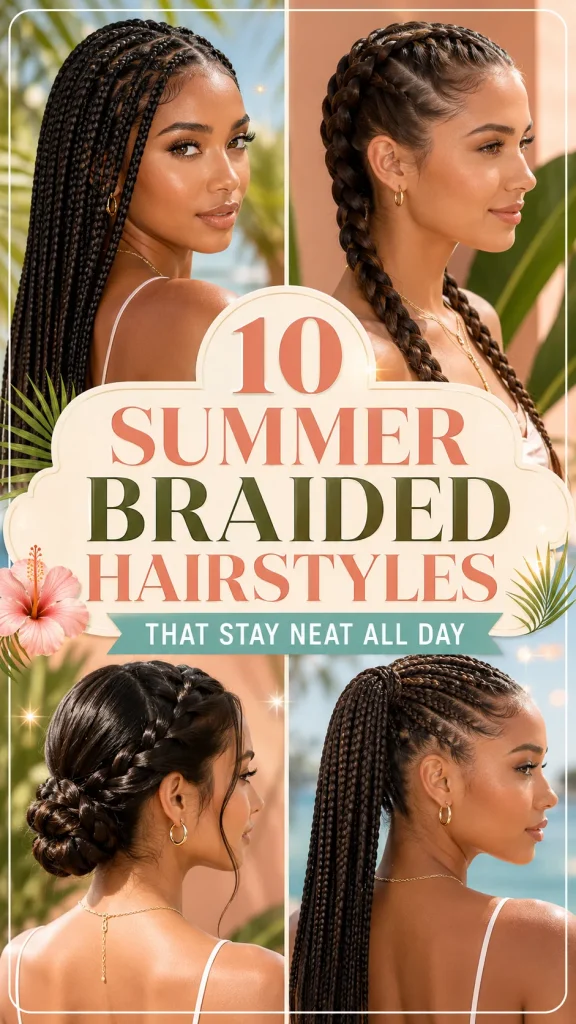
Summer Braided Hairstyles Comparison Table
| Hairstyle | Styling Time | Difficulty | Maintenance | All-Day Hold | Best For |
|---|---|---|---|---|---|
| Double Dutch Braids | 15–25 minutes | Intermediate | Low | Excellent | Active days and workouts |
| Halo Crown Braid | 20–30 minutes | Intermediate | Low | Excellent | Weddings and outdoor events |
| High Braided Ponytail | 10–20 minutes | Easy | Low | Very good | Long and medium hair |
| Feed-In Cornrow Ponytail | 1–3 hours | Advanced | Moderate | Excellent | Textured and natural hair |
| Knotless Box Braids | 4–8 hours | Professional | Moderate | Excellent | Long-term protective styling |
| French Braid Low Bun | 15–25 minutes | Intermediate | Low | Excellent | Work and formal occasions |
| Side Fishtail Braid | 10–20 minutes | Easy to intermediate | Low | Good | Casual and romantic looks |
| Braided Space Buns | 15–25 minutes | Intermediate | Low | Very good | Festivals and playful outfits |
| Rope-Braided Ponytail | 5–10 minutes | Easy | Low | Very good | Busy mornings |
| Braided Low Ponytail | 10–15 minutes | Easy | Low | Excellent | Minimal and elegant styling |
1. Double Dutch Braids
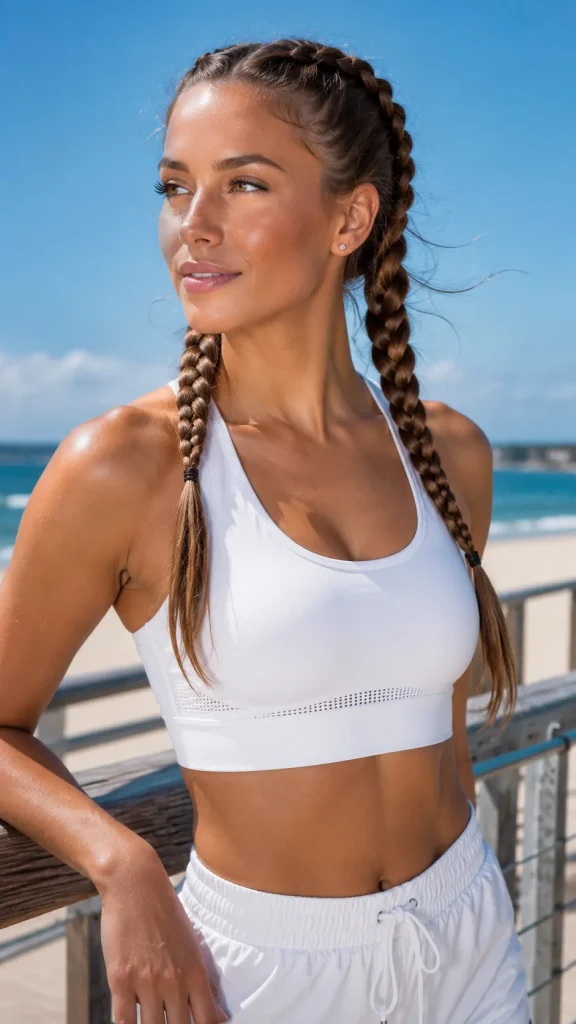
Double Dutch braids are among the most reliable hairstyles for hot, active summer days. The braids begin near the hairline and remain close to the scalp, helping control flyaways, short layers, and growing-out bangs.
Unlike traditional French braids, Dutch braid sections cross underneath one another. This technique creates a raised, dimensional braid that looks detailed while offering strong hold.
Who It Suits Best
Double Dutch braids work particularly well for:
- Medium to long hair
- Straight, wavy, curly, or coily textures
- Layered hair that slips out of regular braids
- Gym sessions, hiking, sports, travel, and beach days
- Anyone who wants hair completely away from the face
Shorter layers may require a small amount of styling gel around the hairline.
Styling Tips
Create a clean center part from the forehead to the nape. Clip one side away and apply a lightweight styling cream to the working section.
Begin with three small sections near the front hairline. Cross each outer section underneath the middle section while gradually adding hair. Keep the braid close to the scalp and maintain consistent tension.
Avoid pulling so tightly that the scalp feels uncomfortable. Secure the ends with small, snag-free elastics and smooth any flyaways with a clean edge brush.
Benefits
- Stays secure during physical activity
- Prevents hair from sticking to the neck
- Reduces tangling in windy weather
- Works well beneath a sun hat
- Can create soft overnight waves when removed
- Keeps layered hair controlled for hours
For a softer appearance, gently loosen only the outer edges after the braids are completely secured.
2. Halo Crown Braid
A halo crown braid wraps around the head like a braided headband. It combines practical hair control with an elegant, romantic appearance, making it suitable for both casual and formal summer occasions.
Because the hair is pinned around the head rather than left hanging down the back, the style keeps the neck cool and prevents long hair from becoming tangled.
Who It Suits Best
This hairstyle is ideal for:
- Medium to long hair
- Thick or naturally textured hair
- Outdoor weddings and garden parties
- Summer dinners, vacations, and photographs
- People who prefer sophisticated updos
Fine hair can also wear this style successfully when prepared with texturizing spray or dry shampoo.
Styling Tips
Part the hair near one ear and begin a Dutch or French braid along the hairline. Continue adding hair while following the natural curve of the head.
Once all the hair has been incorporated, braid the remaining length normally. Wrap the tail around the crown and tuck it beneath the starting point.
Secure the braid with crossed bobby pins rather than relying on one pin. Choose pins that closely match your hair color and place them underneath the braid so they remain hidden.
Benefits
- Keeps hair completely off the neck
- Looks polished from every camera angle
- Resists moderate wind and humidity
- Works with decorative pins or small flowers
- Can transition easily from daytime to evening
- Protects the ends by keeping them tucked away
A light mist of flexible-hold hairspray will help the crown remain neat without making it look stiff.

3. High Braided Ponytail
The high braided ponytail combines the clean lift of a ponytail with the control of a full-length braid. It is a practical choice when you want a sleek, sporty style that still feels fashionable.
Braiding the ponytail prevents the lengths from tangling, expanding in humidity, or becoming uncomfortable against the back.
Who It Suits Best
A high braided ponytail works best for:
- Medium to very long hair
- Thick, straight, wavy, or curly hair
- High-density hair that feels heavy when left loose
- Casual outings, workouts, and poolside days
- Anyone who likes a lifted, face-framing effect
People with fragile edges should avoid excessive tension at the hairline.
Styling Tips
Apply a small amount of lightweight gel or smoothing cream around the roots. Gather the hair at the crown using a brush and secure it with a strong fabric-covered elastic.
Divide the ponytail into three equal sections and braid to the ends. For thicker visual volume, loosen the outer loops slightly after securing the braid.
Wrap a small piece of hair around the ponytail elastic and pin it underneath for a more professional finish.
Benefits
- Keeps the lengths compact and controlled
- Creates the appearance of fuller, longer hair
- Works well with hats and sporty outfits
- Takes less time than scalp-based braids
- Can be refreshed easily during the day
- Prevents knots caused by summer wind
For a sleeker result, tie a satin scarf around the hairline for five to ten minutes before leaving home.

4. Feed-In Cornrow Ponytail
A feed-in cornrow ponytail features several neat cornrows that travel toward a central ponytail. Additional hair can be gradually incorporated to create smooth, natural-looking length without bulky starting points.
This hairstyle is both fashionable and functional. It keeps the scalp accessible, controls the roots, and prevents the hair from becoming tangled during humid weather.
Who It Suits Best
Feed-in cornrows are particularly suitable for:
- Natural, curly, coily, and textured hair
- Medium or long hair
- Protective styling during vacations
- Festivals, concerts, and outdoor celebrations
- People who want a style that can last several days
A trained braider is recommended when adding extensions or creating detailed parting patterns.
Styling Tips
Begin with clean, stretched, moisturized hair. The scalp should be comfortable and free from heavy product buildup.
Use lightweight braiding gel only where needed to create clean sections. Feed extension hair into the braid gradually to prevent a visible knot at the base.
The braids should feel secure but not painful. Persistent pulling, bumps, headaches, or scalp soreness are signs that the style is too tight.
At night, wrap the cornrows with a satin scarf and loosely cover the ponytail with a satin bonnet.
Benefits
- Provides excellent resistance to humidity
- Can remain polished for several days
- Reduces daily manipulation of natural hair
- Keeps the scalp relatively cool
- Allows creative parting and braid patterns
- Works with short, medium, or long ponytail lengths
Apply a light scalp mist as needed, but avoid layering thick oils and heavy gels that can create buildup.

5. Knotless Box Braids
Knotless box braids are one of the most popular protective summer hairstyles because they offer versatility, movement, and long-lasting wear.
Instead of beginning with a tight knot of extension hair, knotless braids start with the natural hair. Small amounts of extension hair are then added gradually. This creates a flatter, more flexible base and can reduce tension when installed correctly.
Who It Suits Best
Knotless box braids are best for:
- Curly, coily, and natural hair textures
- People wanting a multiweek protective style
- Travel, holidays, and busy schedules
- Medium to long styling lengths
- Anyone who wants multiple updo options
The size, weight, and length should be selected according to the strength and density of the natural hair.
Styling Tips
Book an experienced braider who prioritizes scalp health. Ask for lightweight braids and communicate immediately if the installation feels painful.
Cleanse the scalp before installation and avoid using large amounts of heavy butter or oil. During wear, apply a lightweight moisturizing spray to the natural hair when needed.
Tie the braids down with a satin scarf at night. After swimming, rinse away salt or chlorine and allow the scalp and braids to dry thoroughly.
Benefits
- Offers long-term styling convenience
- Provides several ponytail, bun, and half-up options
- Reduces daily heat styling
- Looks natural around the roots
- Can be more comfortable than heavily knotted braids
- Protects the natural lengths from excessive manipulation
Do not keep braids installed beyond the condition of your scalp and new growth. Remove them if you experience irritation, matting, persistent discomfort, or excessive buildup.

6. French Braid Into a Low Bun
A French braid that finishes in a low bun is a polished hairstyle that remains secure without placing excessive weight at the crown.
The braid controls the top and sides, while the bun protects the ends and keeps the hair away from the neck. It is an excellent option for work, formal events, summer dinners, and professional photographs.
Who It Suits Best
This style is especially flattering for:
- Medium to long hair
- Straight, wavy, or loosely curly textures
- Fine hair that benefits from texture
- Office environments and formal occasions
- People who prefer low-tension updos
Thick hair may require several strong pins to secure the bun comfortably.
Styling Tips
Apply texturizing spray through the roots and lengths. Begin a French braid near the crown and add equal amounts of hair to each side as you work downward.
Stop braiding near the nape and secure the remaining hair in a low ponytail. Twist or braid the ponytail, wrap it into a bun, and anchor it with U-shaped pins.
Insert the pins toward the scalp and then turn them inward so they lock into the base of the bun.
Benefits
- Looks neat and professional
- Protects the ends from friction
- Keeps hair away from the face and neck
- Provides a comfortable alternative to high buns
- Works with hair accessories and decorative clips
- Can stay secure throughout long events
Use a toothbrush or small styling brush with a tiny amount of gel to smooth the hairline without overloading the roots.

7. Side Fishtail Braid
A side fishtail braid offers a relaxed summer look while keeping the lengths gathered over one shoulder. Its detailed woven pattern appears complicated, but the technique uses only two main sections.
Although it looks soft and romantic, a well-prepared fishtail braid can remain surprisingly secure throughout the day.
Who It Suits Best
A side fishtail braid is ideal for:
- Medium to long hair
- Straight or wavy textures
- Layer-free or lightly layered cuts
- Brunches, dates, picnics, and holiday photographs
- People who prefer loose, feminine hairstyles
Very silky hair may need texture spray to prevent slipping.
Styling Tips

Move all the hair over one shoulder and divide it into two equal sections. Take a thin piece from the outside of the first section and cross it into the inside of the second section.
Repeat from the opposite side, alternating until you reach the ends. Smaller transferred pieces create a more detailed pattern, while larger sections make the braid faster to complete.
Secure the braid firmly before gently widening selected sections. Do not loosen the upper portion too much, as this is where the style requires the most support.
Benefits
- Looks detailed without requiring advanced tools
- Keeps long hair controlled
- Works well with summer dresses and casual outfits
- Can disguise slightly oily roots
- Creates an attractive asymmetrical shape
- Feels lighter than a centered braid down the back
Secure short face-framing layers with discreet pins or allow only a few intentional pieces to remain loose.

8. Two Braided Space Buns
Braided space buns are playful, youthful, and highly practical for festivals, theme parks, concerts, and busy summer weekends.
Instead of twisting loose ponytails into buns, each section is braided first. This helps the buns stay compact and makes the style more resistant to wind and movement.
Who It Suits Best
Braided space buns work well for:
- Medium to long hair
- Straight, wavy, curly, and coily textures
- Thick or high-density hair
- Creative events and casual outfits
- Anyone wanting a balanced, symmetrical style
The buns can be placed high for a playful appearance or lower for a softer result.
Styling Tips
Create a precise center part and secure each side into a ponytail. Check the placement from the front and back before tightening the elastics.
Braid each ponytail to the ends, then wrap the braid around its base. Secure each bun with several pins positioned in different directions.
For additional hold, use two elastics at the base of each ponytail or a small hair bungee for very thick hair.
Benefits
- Keeps all hair away from the face and neck
- Holds better than loosely twisted space buns
- Creates a bold, social-media-friendly look
- Reduces tangling during outdoor activities
- Can be customized with ribbons or accessories
- Works well on second- or third-day hair
Keep the accessories lightweight. Heavy clips can pull the buns out of position or create uncomfortable scalp tension.

9. Rope-Braided Ponytail
A rope braid is one of the fastest ways to turn a basic ponytail into a clean, heat-resistant summer hairstyle.
The ponytail is divided into two sections. Each section is twisted in one direction, and the two sections are then wrapped around each other in the opposite direction. The opposing movement helps the rope braid hold its shape.
Who It Suits Best
This style is suitable for:
- Medium to long hair
- Straight, wavy, or curly textures
- Busy mornings and last-minute plans
- Gym sessions and casual workdays
- Beginners who struggle with three-strand braiding
Fine hair can benefit from volumizing powder, while thick hair may need a larger elastic.
Styling Tips
Secure a mid-height or high ponytail and divide it into two equal sections. Twist both sections clockwise until they feel firm.
Next, wrap the two twisted sections around each other counterclockwise. Secure the end immediately with a strong elastic.
Use a light styling cream before twisting if your hair has short layers or visible frizz.
Benefits
- Can be completed in less than ten minutes
- Requires only two sections
- Looks sleek and modern
- Keeps the ponytail from tangling
- Works well for active summer days
- Can be worn high, low, or to one side
The most common reason a rope braid unravels is twisting both stages in the same direction. Always twist the sections one way and wrap them together the opposite way.

10. Sleek Braided Low Ponytail
A sleek braided low ponytail is minimal, elegant, and extremely secure. The roots are smoothed toward the nape, and the ponytail is braided tightly to control the lengths.
It is less demanding than a full scalp braid but delivers a neat appearance that works for professional settings, travel, evening events, and everyday summer styling.
Who It Suits Best
A braided low ponytail works for:
- Medium to long hair
- Straight, wavy, curly, or stretched textures
- Fine to thick hair
- Minimalist and formal outfits
- People who prefer comfortable, low-positioned styles
It can also be adapted with a center part, side part, or brushed-back finish.
Styling Tips
Choose the desired part before applying product. Smooth the hair toward the nape with a boar-bristle or mixed-bristle brush.
Secure the ponytail with a fabric-covered elastic. Apply a small amount of serum or styling cream through the ponytail, divide it into three sections, and braid evenly.
Finish by wrapping a narrow piece of hair around the base to conceal the elastic. Pin it underneath where the pin will not be visible.
Benefits
- Comfortable for long periods
- Fits beneath many hats and scarves
- Prevents loose hair from expanding in humidity
- Looks appropriate for casual and formal settings
- Requires minimal braiding experience
- Can be refreshed quickly with water and edge control
Avoid applying too much gel throughout the entire head. Concentrate product only where smoothing is necessary to prevent stiffness and buildup.

How to Make Summer Braids Last All Day
The technique matters, but preparation often determines how long a braid remains neat.
1. Begin With Detangled Hair
Knots create uneven sections and make the braid look bulky. Detangle from the ends upward using a suitable brush or wide-tooth comb.
2. Avoid Overloading the Hair With Product
Too much oil, conditioner, or serum can make fine hair slippery. Heavy product can also attract dust and cause buildup around the scalp.
Use the smallest effective amount and focus it where control is needed.
3. Create Clean, Even Sections
Unequal sections cause one side of the braid to become thinner before the other. Maintain similar section sizes and consistent hand placement throughout the process.
4. Use the Correct Elastic
Choose snag-free elastics that suit your hair density. A weak elastic may snap, while a very small elastic can place unnecessary pressure on thick hair.
5. Control the Hairline Separately
Use a small brush and a light layer of gel, foam, or edge control around the front. Cover the area with a satin scarf for several minutes to help it set.
6. Protect the Style From Moisture
When showering, use a secure shower cap. During intense exercise, a moisture-wicking headband can help absorb sweat before it reaches the braid.
7. Carry a Small Refresh Kit
A useful summer hair kit may include:
- Two spare elastics
- Three or four bobby pins
- A travel-size comb
- A small edge brush
- Lightweight anti-frizz serum
- Flexible-hold hairspray
Expert Tips for Heat-Proof, Humidity-Resistant Braids
Match the Product to Your Hair Type
Fine hair generally needs texture and grip rather than heavy moisture. Thick, curly, or coily hair may benefit from a moisturizing leave-in product followed by a light styling gel.
Work With Slightly Stretched Hair
Stretching curly or coily hair before braiding can make sectioning easier and improve longevity. Heat is not always necessary; banding, threading, or loose overnight braids can also stretch the hair.
Do Not Braid Soaked Hair Tightly
Hair is more vulnerable to stretching and breakage when wet. If you prefer braiding damp hair, allow it to become mostly dry and avoid excessive tension.
Prioritize Scalp Comfort
A braid should feel secure, not painful. Tightness around the hairline can contribute to breakage and traction-related hair loss over time.
Rinse After Swimming
Chlorine and salt can dry the hair and irritate the scalp. Rinse as soon as possible, apply appropriate moisture, and ensure the hair dries completely.
Consider UV Protection
Hair and scalp can also be affected by prolonged sun exposure. Use a hat, scarf, umbrella, or hair product formulated with UV protection during extended outdoor activities.
Common Braiding Mistakes to Avoid
Braiding Without Detangling
Braiding over knots can lead to uneven tension, rough sections, and breakage during removal.
Using Too Much Tension
Tighter does not always mean longer lasting. Excessive tension can create headaches, bumps, thinning edges, or scalp soreness.
Ignoring the Ends
Dry ends may split or escape from the braid. Apply a small amount of leave-in conditioner to the last few inches before braiding.
Using Old or Damaged Elastics
Elastics with exposed rubber or metal joins can catch the hair. Replace stretched, cracked, or rough accessories.
Pulling the Braid Apart Too Early
“Pancaking” makes braids look fuller, but loosening the sections before the elastic is secure may cause the entire braid to collapse.
Sleeping Without Protection
Cotton pillowcases can create friction and fuzziness. A satin or silk scarf, bonnet, or pillowcase can help maintain the surface of the braid.
Leaving Protective Braids in Too Long
Long-term braids still require scalp care and timely removal. Excessive new growth, buildup, matting, or discomfort should not be ignored.
How to Choose the Right Summer Braid
Consider three factors before selecting your hairstyle.
Your Schedule
Choose double Dutch braids or a rope-braided ponytail for active days. Select a crown braid or French braid bun for formal events. Knotless box braids may be more practical for extended travel.
Your Hair Length
Short to medium hair usually stays more secure in scalp-based braids. Long hair offers greater flexibility for fishtails, ponytail braids, crown styles, and braided buns.
Your Hair Texture
Fine or silky hair often needs dry shampoo or texture spray. Curly and coily hair may need moisture, careful detangling, and a product that offers both slip and control.
The most effective style is not necessarily the most complicated one. It is the braid that remains comfortable, suits your day, and protects your hair without unnecessary tension.
Frequently Asked Questions
Which braid lasts the longest in hot weather?
Cornrows, feed-in braids, knotless box braids, and tightly secured Dutch braids generally offer the longest wear. Their close-to-the-scalp structure limits movement and helps control frizz.
How do I stop my braids from becoming frizzy in humidity?
Apply a lightweight anti-frizz cream before braiding, use consistent tension, smooth the hairline separately, and finish with styling foam or flexible-hold hairspray. A satin scarf can help set the finished style.
Should I braid clean or slightly dirty hair?
Braids can be created on clean hair or lightly lived-in hair. Clean hair is important for long-term protective styles, while second-day hair may provide better grip for temporary braids. Avoid braiding hair with heavy scalp buildup.
Can summer braids damage the hair?
Braids are not automatically damaging. Problems usually occur when the hair is braided too tightly, extensions are too heavy, the style is left in too long, or the hair is handled roughly during removal.
What is the easiest summer braid for beginners?
A rope-braided ponytail is one of the easiest options because it uses only two sections. A standard three-strand braided ponytail and a sleek braided low ponytail are also beginner-friendly.
Conclusion
The best summer braided hairstyles offer more than an attractive finish. They help control frizz, reduce tangling, protect the lengths, and keep hair away from the face and neck during warm weather.
Double Dutch braids are ideal for active days, while halo braids and French braid buns provide an elegant finish for special events. Feed-in cornrows and knotless box braids offer longer-term convenience, and quick ponytail braids are perfect for busy mornings.
Whichever style you choose, focus on clean sections, moderate tension, suitable products, and secure accessories. A comfortable braid created with healthy techniques will always look better and last longer than an excessively tight style.


Leave a Reply