10. Install a Custom Pegboard Organizer Wall
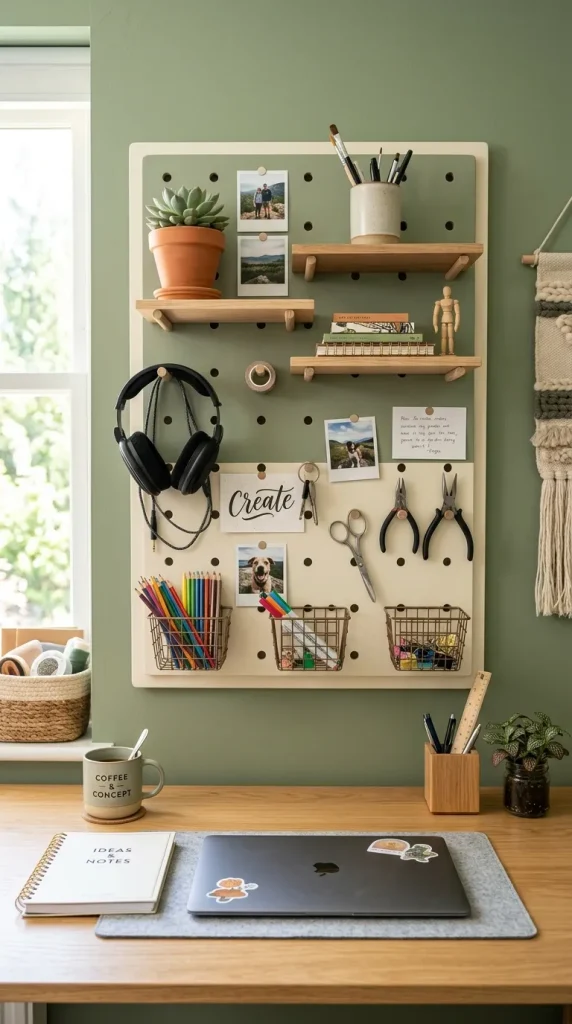
A pegboard is one of the most flexible DIY room organization systems. Hooks, baskets, shelves, clips, and small containers can be moved whenever your storage needs change.
It can organize stationery, jewelry, craft materials, headphones, photographs, tools, plants, and daily essentials.
Who It Suits Best
A pegboard organizer is excellent for:
- Students
- Artists and crafters
- Small home offices
- Gaming setups
- Makeup or jewelry collections
- Rooms with limited drawer space
How to Install It
Purchase a pre-cut pegboard or create one from plywood using accurately spaced holes. Sand the surface and apply paint or clear finish.
Mount the board slightly away from the wall using spacers so hooks can fit through the holes. Use suitable wall anchors based on the wall material and the expected weight.
Arrange the largest shelves and containers first. Fill smaller gaps with hooks, clips, and decorative items.
Styling Tips
Paint the pegboard in the same color as the wall for a subtle built-in appearance. Choose a contrasting color when you want it to become a focal feature.
Combine functional and decorative pieces. For example, place notebooks and scissors beside a small plant, motivational card, or photograph.
Group similar items together and leave some empty space so the board does not appear overcrowded.
Benefits
A pegboard keeps important items visible and accessible while freeing up desk and drawer space. Its modular design means you can reorganize it repeatedly without purchasing a completely new storage system.
Pro Tips for a Professional-Looking DIY Room Makeover
Begin With a Clear Color Palette
Choose three main colors before starting your projects:
- A dominant base color
- A secondary supporting color
- A smaller accent color
For example, you might combine cream, sage green, and black. Repeating these colors across your wall art, storage, bedding, and accessories will make separate DIY projects feel connected.
Measure Every Space Carefully
Never rely on visual estimates. Measure the wall, furniture, shelf, and decorative object before cutting materials or drilling holes.
Use painter’s tape to mark the size of a proposed shelf, canvas, or accent arch. Step back and check the proportions before committing.
Repeat Materials and Textures
A room feels more cohesive when certain finishes appear more than once. If you use natural wood for a hanging shelf, repeat it in a picture frame or crate organizer.
Similarly, a small metallic detail can be repeated in lamp bases, drawer handles, mirror trim, or decorative containers.
Hide Wires and Hardware
Visible cables can make even beautiful decor look unfinished. Use cable clips, cord covers, adhesive channels, or furniture placement to keep wires organized.
Select hooks and brackets that match the wall or decor whenever possible.
Prioritize Function as Well as Style
The most successful cool room decor DIY ideas solve a practical problem while improving the appearance of the room.
A pegboard adds visual interest and organization. A mirror decorates the wall and reflects light. A reading corner fills empty space and supports relaxation.
Test Removable Options First
Renters should use removable hooks, peel-and-stick materials, tension rods, and freestanding displays where appropriate.
Always review product instructions and test adhesive materials in a hidden area because some removable products can still affect delicate paint.
Common DIY Room Decor Mistakes to Avoid
Starting Without a Plan
Buying materials before selecting a style can lead to mismatched colors, unnecessary expenses, and unfinished projects. Create a simple mood board before shopping.
Adding Too Many Small Decorations
Numerous tiny objects can make a room feel cluttered. Use fewer, slightly larger statement pieces and leave open areas where the eye can rest.
Ignoring Scale
A small picture may look lost above a large bed, while an oversized shelf can overwhelm a narrow desk. Match each decoration to the furniture and wall around it.
Choosing Appearance Over Safety
Decorative projects must be securely mounted. Use proper anchors for shelves, mirrors, planters, and lighting. Avoid placing heavy items above the bed.
Only use low-heat, certified LED products in handmade lighting projects.
Using the Wrong Adhesive
Different materials require different adhesives. A glue designed for paper may not hold wood, glass, fabric, or plastic.
Read the manufacturer’s instructions and confirm that the product is appropriate for both surfaces.
Skipping Surface Preparation
Dust, grease, rough edges, and peeling paint can affect the final result. Clean, sand, prime, or dry the surface as required before decorating it.
Following Trends Too Literally
Trends can provide inspiration, but your room should still reflect your interests and daily habits. Choose adaptable elements rather than copying every popular aesthetic at once.
How to Choose the Right DIY Decor Idea for Your Room
Begin by identifying the biggest problem in your room.
Is the wall empty? Create textured canvas art, a photo display, or a painted arch.
Is the space dark? Decorate a mirror or add a custom LED sign.
Is the room cluttered? Build crate storage or install a pegboard organizer.
Does the room feel cold or impersonal? Add plants, photographs, warm lighting, and layered fabrics.
For the best results, begin with one focal project and one functional project. For example, combine a painted arch with a pegboard or pair a cloud light with storage crates.
Completing two coordinated projects usually creates a more noticeable transformation than adding several unrelated accessories.
Frequently Asked Questions
What are the easiest cool room decor DIY ideas for beginners?
Floating photo displays, textured canvas art, decorative mirror frames, and cozy reading corners are among the easiest projects. They require few tools and can usually be completed in one afternoon.
How can I decorate my room without spending much money?
Reuse materials you already own, update second-hand items, print your own wall art, repurpose wooden crates, and use leftover paint. Focus on one visible area rather than purchasing decorations for the entire room at once.
What DIY room decor is suitable for renters?
Use removable adhesive hooks, freestanding crate shelves, tension-rod displays, leaning mirrors, fabric wall hangings, and peel-and-stick products designed for temporary use. Test adhesives before applying them to a large area.
How do I make DIY room decor look expensive?
Use a limited color palette, accurate measurements, clean edges, quality hardware, and balanced spacing. Neutral shades, natural wood, textured fabrics, simple shapes, and matte finishes often create a more polished appearance.
How many DIY decorations should I add to one room?
There is no fixed number. Begin with one main focal point and two or three supporting details. Stop when the space feels complete but still has visible open areas. Function, scale, and visual balance matter more than quantity.
Conclusion
A memorable room does not require expensive furniture or designer accessories. The most effective spaces are thoughtful, functional, and personal.
These 10 cool room decor DIY ideas allow you to improve empty walls, solve storage problems, introduce better lighting, and express your creativity without completely renovating your room.
Start with the project that solves your room’s most obvious problem. Measure carefully, select a consistent color palette, and complete one idea before moving to the next. Even a simple photo display, painted arch, or customized mirror can make the entire space feel more intentional.