Master floral arrangements DIY styles at home. Discover 10 breathtaking centerpiece ideas, pro conditioning tips, and design secrets to build expert bouquets.
floral arrangements diy, homemade flower centerpieces, amateur florist guide, conditioning fresh cut flowers, spiral bouquet technique, architectural flower design.
There is something undeniably magical about walking into a room graced by fresh, vibrant blossoms. They instantly elevate our spirits, add an exquisite organic softness to our living spaces, and make any ordinary day feel like a special occasion. Whether you are hosting an intimate dinner party, celebrating a milestone, or simply wanting to brighten your entryway console, beautiful blossoms are the ultimate design accessory.
However, buying premium, pre-made centerpieces from high-end boutiques can quickly become an expensive luxury. On the flip side, trying your hand at building your own centerpiece can feel incredibly frustrating. We have all been there: you buy a gorgeous bundle of fresh stems from the local market, bring them home, trim them, and drop them into a vase—only for the heavy heads to flop sadly over the rim, leaving an awkward, empty gap right in the middle of your display.
You do not need an expensive floral design degree or professional florist tools to achieve a breathtaking, high-end look. The secret lies in mastering basic, structural floral arrangements diy techniques. By understanding how to prep your stems, build hidden foundations, and layer focal flowers with delicate accent greenery, you can create professional-grade displays at a fraction of the cost. This comprehensive guide breaks down 10 stunning, trend-forward floral design concepts, complete with expert advice to help you design with complete confidence.
Technical Comparison of DIY Floral Design Concepts
Before choosing your design theme, review this practical reference table. It evaluates the assembly time, styling difficulty, and water maintenance requirements for each floral arrangement style.
| Floral Arrangement Concept | Assembly Time | Technical Difficulty | Maintenance Level | Best Vase Type |
| Monochromatic Rose Dome | 20–30 Mins | Low | Low (Change water daily) | Classic Round Ceramic |
| Wild Asymmetrical Meadow | 30–45 Mins | High | Medium (Mist daily) | Wide-Mouth Low Ceramic Bowl |
| Sleek Minimalist Ikebana | 15 Mins | Medium | Low | Shallow Ceramic Pin Frog Dish |
| High-Volume Spiral Bouquet | 30 Mins | High | Medium | Fluted Clear Glass Urn |
| Rustic Mason Jar Grid | 15 Mins | Low | Low | Trio of Clear Mason Jars |
| Architectural Eucalyptus Wrap | 20 Mins | Low | Very Low (Long-lasting) | Tall Cylinder Glass Vase |
| Whimsical Floating Blossom Bowl | 10 Mins | Low | High (Change water often) | Shallow Glass or Stone Basin |
| Tropical Paradise Canopy | 25–35 Mins | Medium | Low | Heavy Structured Stoneware Jug |
| Ombre Gradient Bud Vases | 15 Mins | Low | Low | Collection of Varied Glass Bottles |
| Cascade Greenery Garland | 45–60 Mins | High | High (Needs fresh hydration) | Long Table Runner/No Vase |
10 Breathtaking Floral Arrangements DIY Ideas to Master
1. The Monochromatic Rose Dome
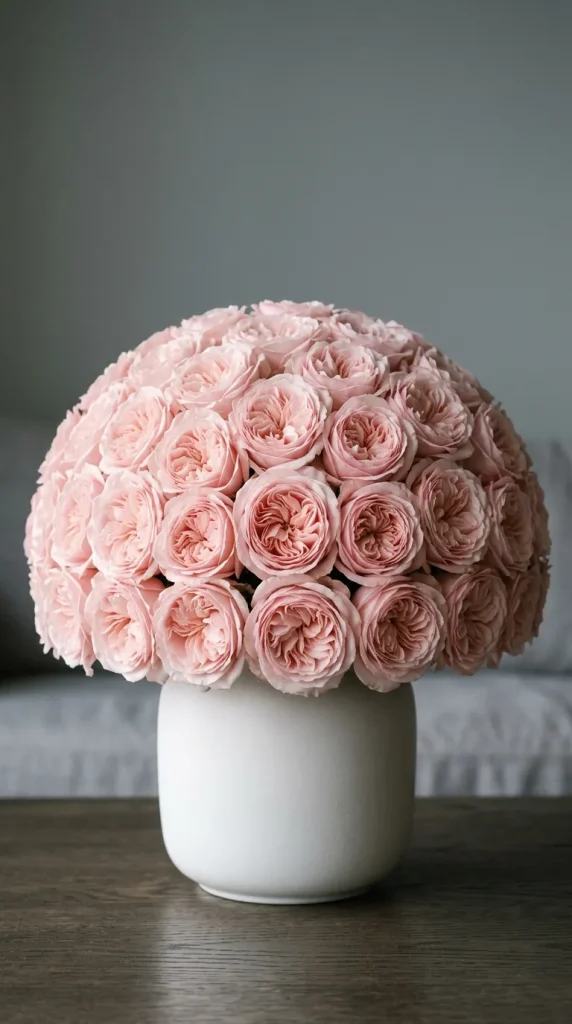
This elegant concept focuses on a single, uniform flower variety—such as premium garden roses, ranunculus, or carnations—tightly packed in a dome shape. The stems are cut to an identical length, creating a dense, velvety mound of color that completely hides the rim of the vase.
- Who It Suits Best: Lovers of timeless, clean, classic, or Parisian boutique aesthetics. It is an exceptionally easy and forgiving design for absolute beginners.
- Design & Styling Tips: Use a chicken wire ball or a tape grid across the mouth of a round ceramic vase to hold the stems firmly in place. Start placing stems around the outer rim at an angle, working your way inward in concentric circles, raising the height of the center stems slightly to form a perfect, smooth dome.
- Key Benefits: It provides a clean appearance that looks incredibly expensive and high-end due to the sheer density of the blooms. It requires zero complex color-matching skills.