10. Red, White, and Blue Floral Display
A patriotic floral display is the fastest project on this list, yet it can look elegant enough for a formal dinner or holiday brunch.
Combine naturally red and white flowers with blue containers, ribbons, flags, or decorative picks. Truly blue fresh flowers can be difficult to find, so use blue accents rather than artificially dyed flowers when you want a natural appearance.
Materials You Will Need
- Red and white fresh or artificial flowers
- Blue vase, jar, or ribbon
- Greenery
- Floral shears
- Floral food for fresh arrangements
- Miniature flags or star picks
How to Make It
Choose a container that is approximately one-half to two-thirds the height of the finished arrangement. Trim the stems at an angle and remove leaves that would sit below the waterline.
Begin with greenery, add the largest flowers, and fill gaps with smaller blooms. Rotate the arrangement as you work so it looks balanced from multiple angles.
Finish with a blue ribbon, blue vase, or a few patriotic picks.
Who It Suits Best
This arrangement suits last-minute decorators, people who prefer elegant home styling, dinner hosts, and anyone who does not enjoy complicated craft projects.
Decorating Tips
Use red roses or carnations, white daisies or hydrangeas, and a navy container for a sophisticated display. For a casual country look, place red and white wildflowers in a blue mason jar.
Keep arrangements low on dining tables so guests can see one another easily.
Benefits
- Takes less than half an hour
- Works with fresh or artificial flowers
- Complements almost every decorating style
- Can be adjusted for small or large spaces
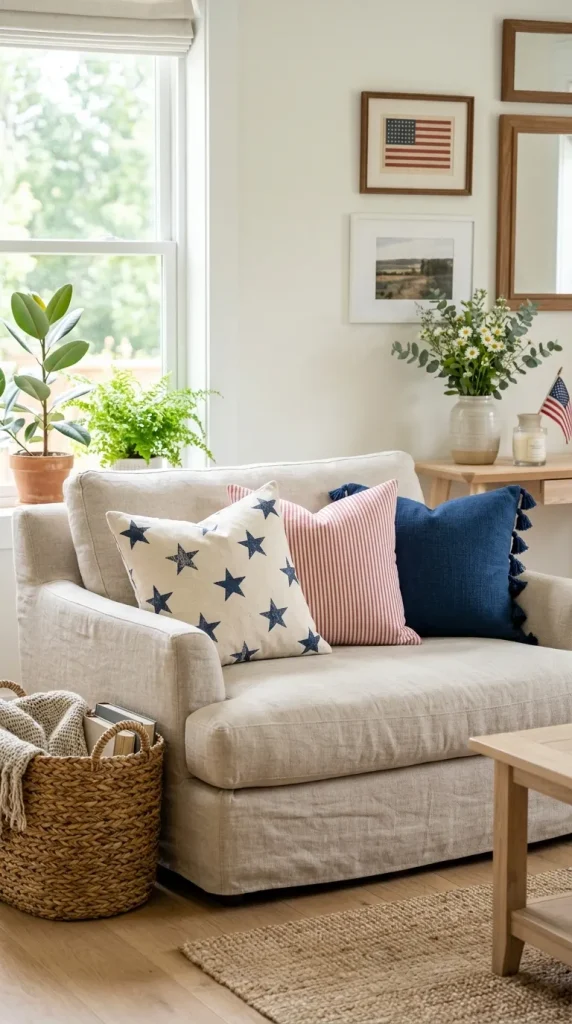
How to Make DIY Fourth of July Decor Look More Expensive
Inexpensive materials do not have to produce inexpensive-looking results. Thoughtful editing and presentation can make simple crafts feel polished.
Use a Consistent Color Palette
Traditional red, bright white, and royal blue create an energetic look. For a more refined interior, consider muted brick red, cream, navy, natural wood, and antique brass.
Choose one version of the palette and repeat it throughout the space.
Repeat Materials and Patterns
A room feels coordinated when the same elements appear more than once. For example, repeat striped ribbon on your wreath, centerpiece, and napkins.
Stars, gingham, denim, jute, galvanized metal, and natural wood are all effective supporting elements.
Decorate in Odd-Numbered Groups
Arrangements of three or five objects often look more natural than evenly paired items. Group three mason jars, five paper fireworks, or three lanterns of different heights.
Create One Strong Focal Point
You do not need decorations on every surface. A bold wreath, styled mantel, colorful table, or decorated porch can create more impact than many small, unrelated crafts.
Leave Some Empty Space
Crowding every shelf and table can make the room feel chaotic. Allow breathing room around important decorations so guests can notice the details.
Pro Tips for Successful Patriotic Decorating
- Start with items you already own. White dishes, red napkins, blue vases, baskets, trays, and neutral pillow covers can become part of your holiday display.
- Choose reusable materials. Fabric, wood, glass, ribbon, and artificial greenery usually survive storage better than delicate paper pieces.
- Prepare outdoor decorations for weather exposure. Use exterior paint, waterproof adhesive, and protective sealant when necessary.
- Use battery-operated lighting. It is safer and easier to position than open flames, particularly around children and pets.
- Measure before crafting. Check the width of your door, mantel, table, or railing before creating wreaths, signs, garlands, and runners.
- Photograph the finished setup. A photograph helps you remember how items were arranged when you reuse them next year.
- Label storage containers. Keep patriotic ribbons, signs, garlands, and table accessories together in a clearly marked bin.
Common DIY 4th of July Decorating Mistakes to Avoid
Using Too Many Patterns
Stars, stripes, gingham, bandana prints, and fireworks can compete when used simultaneously. Select one dominant pattern and use the others in smaller amounts.
Ignoring Outdoor Safety
Do not place paper crafts near grills, fire pits, candles, or fireworks. Secure lightweight decorations so they cannot blow into flames, streets, pools, or neighboring properties.
Using Indoor Materials Outside
Regular paper, untreated wood, and some craft paints can be damaged by moisture and sunlight. Place delicate items in covered areas or use outdoor-rated materials.
Skipping Surface Preparation
Paint may peel from dirty jars, greasy cans, dusty wood, or unwashed fabric. Clean and prepare every surface before applying paint or adhesive.
Making Every Item Identical
A perfectly matched display can feel flat. Create variety through height, texture, scale, and pattern while keeping the color palette consistent.
Overdecorating the Dining Table
Tall arrangements and too many accessories can interfere with serving food and conversation. Keep centerpieces low, stable, and easy to move.
Waiting Until the Event Day
Even simple projects may require drying, freezing, sealing, or adhesive-curing time. Complete painted and glued pieces at least one day before your celebration whenever possible.
Frequently Asked Questions
What are the easiest DIY 4th of July decorations for beginners?
The easiest projects include patriotic mason jars, paper firework bursts, a bandana table runner, a floral arrangement, and a no-sew fabric garland. These ideas use basic materials and do not require advanced tools or crafting experience.
How can I decorate for the Fourth of July on a small budget?
Reuse jars, cans, scrap fabric, plain pillow covers, leftover wood, and household trays. Focus on one high-impact area, such as the front door or dining table, instead of decorating every room. Dollar-store ribbon, paper, flags, and artificial flowers can also reduce costs.
Can homemade Fourth of July decorations be used outdoors?
Yes, but the materials must be suitable for outdoor conditions. Use weather-resistant paint, exterior sealant, waterproof adhesive, and durable fabrics. Keep paper crafts and untreated wood in covered areas, and bring lightweight items indoors during rain or strong wind.
When should I begin decorating for the Fourth of July?
Many people begin decorating in mid-to-late June and keep patriotic pieces displayed through the Fourth of July weekend. Neutral Americana decorations can remain in place for most of the summer, especially when they use navy, cream, natural wood, and muted red.
How do I store DIY patriotic decorations?
Clean every item before storage and make sure painted or fabric pieces are fully dry. Wrap fragile decorations in tissue paper, store wreaths in structured containers, fold fabric items neatly, and place small accessories in labeled bags. Keep everything in a dry, temperature-controlled space when possible.
Final Thoughts
Creating a memorable holiday atmosphere does not require expensive store-bought accessories or complicated crafting skills. The best easy DIY 4th of July decorations combine simple materials, practical techniques, and thoughtful styling.
Start with one project that fits your available time and space. A floral centerpiece may be enough for a small dinner, while a wreath, lawn stars, lanterns, and fabric garland can transform a larger celebration.
Most importantly, let your decorations reflect your personality. Choose polished navy and cream accents for an elegant home, distressed wood and bandanas for a farmhouse look, or bright paper fireworks for a playful family party