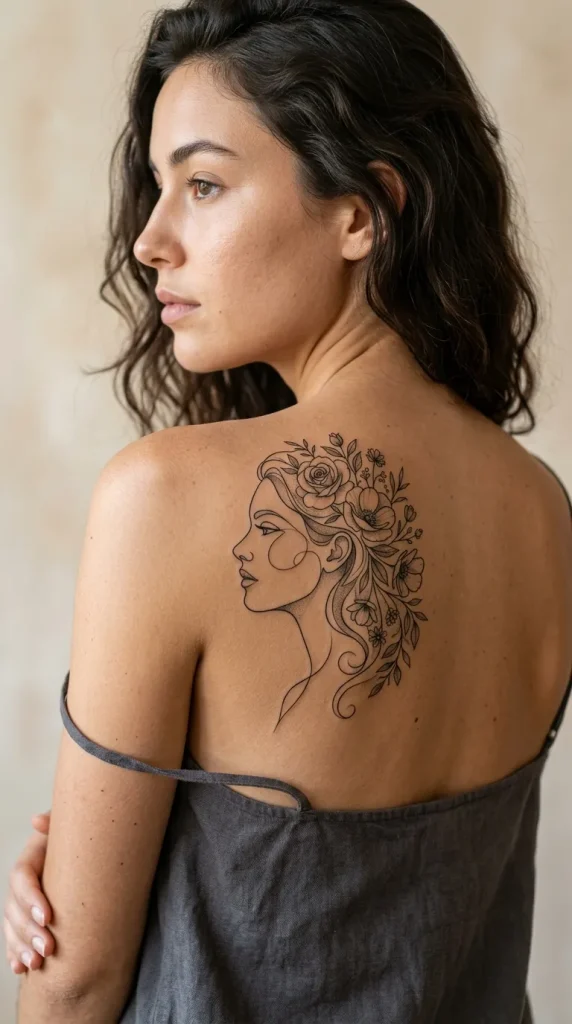
10. Abstract Feminine Silhouette With Wildflowers
This design combines the outline of a feminine face or body with flowers, leaves, and flowing abstract lines. Parts of the silhouette may remain incomplete, allowing the botanical elements to form the hair, clothing, or facial profile.
The composition may symbolize confidence, femininity, freedom, growth, identity, body acceptance, or connection with nature.
To make the tattoo more inclusive and personal, the silhouette can reflect your own features, body shape, hair texture, or profile.
Who It Suits Best
This idea suits women who:
- Want to celebrate feminine identity
- Love modern, artistic tattoos
- Prefer symbolic portraits instead of realistic ones
- Connect with themes of self-love and growth
- Want a design that balances strength and softness
Design and Placement Tips
Give your artist personal reference photos if you want the silhouette to resemble you. The design does not need to be a detailed portrait; even the shape of the nose, lips, curls, or posture can create a personal connection.
Select flowers based on their meaning. Sunflowers can suggest optimism, roses may represent love, poppies can symbolize remembrance, and wildflowers often communicate freedom.
The forearm, thigh, shoulder blade, ribs, and upper arm provide enough space for flowing lines.
Maintain a clear visual balance between the profile and botanical elements. Neither part should overpower the other.
Benefits
This tattoo feels artistic, empowering, and deeply adaptable. It can celebrate femininity without following a narrow definition of beauty.
Its open-line composition also allows the design to appear graceful and spacious rather than heavy.
How to Make a Tattoo Design Truly Unique
A design does not have to feature a never-before-seen symbol to be original. Personalization comes from how the elements are selected and combined.
Add Meaningful Details
Consider incorporating:
- Birth flowers
- Initials
- Important dates
- Family symbols
- Handwriting
- Local plants
- Cultural patterns
- Favorite landscapes
- Personal affirmations
- Symbols of an achievement
Choose details because they matter to you, not simply because they are currently popular.
Customize the Composition
Bring several separate references to your artist rather than asking for an exact copy of one tattoo.
For example, you might like the petals from one flower illustration, the curved placement from another tattoo, and the shading technique from a third reference. A skilled artist can use those preferences to create an original composition.
Choose Placement Carefully
Tattoo placement affects how a design moves with the body. A flowing vine may suit the ribs or spine, while a symmetrical moth may work better on the sternum or upper back.
Your lifestyle should also influence placement. Consider workplace requirements, sun exposure, clothing friction, exercise routines, and how visible you want the tattoo to be.
Professional Tips for Choosing Your Tattoo
Research the Artist’s Specialty
Not every talented tattoo artist is equally skilled in every style. Look for an artist whose healed portfolio includes the technique you want.
For example:
- Choose a fine-line specialist for delicate floral tattoos.
- Select an illustrative artist for storybook scenes.
- Find an ornamental specialist for symmetrical cuffs.
- Choose an experienced color artist for kintsugi-inspired gold effects.
- Work with a blackwork artist for bold moth designs.
Healed photographs are especially useful because fresh tattoos can look different after the skin settles.
Prioritize Longevity Over Tiny Details
A tattoo must remain readable after years of natural skin changes. Designs that look perfect in an enlarged digital image may lose clarity when tattooed at a very small size.
Allow enough spacing between lines. Your artist may recommend increasing the design size or simplifying certain elements.
Request a Custom Consultation
During the consultation, discuss:
- Desired size
- Placement
- Meaning
- Preferred line weight
- Black-and-grey versus color
- Budget
- Number of sessions
- Previous skin reactions
- Future expansion ideas
A detailed consultation reduces misunderstandings and gives the artist time to develop a stronger design.
Think Beyond Current Trends
Trends can provide inspiration, but a permanent tattoo should connect with your long-term preferences.
Ask yourself:
- Does the design have personal significance?
- Would I still appreciate it without seeing it online?
- Does it reflect my own style?
- Have I chosen the placement intentionally?
- Am I comfortable with its visibility?
Common Tattoo Mistakes to Avoid
Copying Another Person’s Tattoo Exactly
Using a tattoo as inspiration is different from reproducing it line for line. Exact copying can disrespect both the original wearer and the artist who created the design.
Ask your artist to change the composition, symbols, flowers, proportions, shading, and placement.
Choosing a Design That Is Too Small
Micro tattoos can be attractive, but not every idea works at a tiny scale. Fingerprints, landscapes, lettering, and ornamental patterns need enough space to remain clear.
Listen when an experienced artist recommends a larger size.
Ignoring Placement Movement
A tattoo may look different when you bend your wrist, twist your torso, or move your shoulder. Placement should be tested while the body is both relaxed and moving.
Selecting an Artist Based Only on Price
A low price should never be the main reason for choosing an artist. Professional training, hygiene, artistic experience, quality materials, and aftercare guidance all matter.
A tattoo is a permanent service. Saving money at the expense of safety or quality may lead to expensive correction or removal later.
Following Poor Aftercare Practices
Do not follow random social media advice over the instructions provided by your tattoo professional.
General aftercare usually involves keeping the area clean, avoiding picking or scratching, limiting water exposure, wearing loose clothing, and protecting the healed tattoo from sunlight. Follow the specific method recommended by your artist.
Forgetting to Verify Text and Numbers
Check names, dates, coordinates, foreign-language phrases, Roman numerals, and spelling several times before tattooing begins.
Read the stencil carefully rather than assuming it is correct.
Tattoo Aftercare and Long-Term Maintenance
Good aftercare helps the skin heal properly and supports the tattoo’s appearance.
Follow your artist’s instructions regarding bandage removal, cleaning, moisturizing, bathing, clothing, and physical activity. Contact the studio if you are uncertain about any stage of the healing process.
During healing:
- Wash your hands before touching the area.
- Use only recommended products.
- Do not peel flakes or scabs.
- Avoid swimming and soaking.
- Limit friction from tight clothing.
- Keep the tattoo away from direct sunlight.
- Avoid applying makeup or fragranced products to the area.
Once the tattoo has fully healed, use sun protection to reduce fading. Keep the skin moisturized and consider a professional touch-up if lines or color become uneven over time.
Seek medical advice if you experience signs of a serious reaction or infection, such as worsening pain, spreading redness, excessive swelling, fever, or unusual discharge.
Frequently Asked Questions
What is the most unique tattoo idea for a woman?
The most unique tattoo is one created around the wearer’s personal story. Fingerprints, handwriting, birth flowers, meaningful locations, family symbols, and custom illustrations can make a tattoo genuinely individual.
Which tattoo style looks most feminine?
Fine-line florals, ornamental designs, botanical illustrations, soft black-and-grey shading, watercolor details, and flowing abstract linework are often considered feminine. However, femininity is personal, and bold blackwork, geometric designs, or large illustrative tattoos can be equally expressive.
Where should a woman place her first tattoo?
Popular first-tattoo placements include the outer forearm, upper arm, shoulder blade, thigh, ankle, and calf. The best placement depends on the desired visibility, pain tolerance, design size, lifestyle, and workplace expectations.
How can I make a small tattoo more meaningful?
Add a personal detail such as an initial, birth flower, coordinate, fingerprint, handwritten word, symbolic number, or tiny representation of an important place. Keep the composition simple so the tattoo remains clear.
How long should I think about a tattoo before getting it?
There is no mandatory waiting period, but it is wise to live with the idea for several weeks or months. Save the design as your phone background, print it at the intended size, and consider how you feel about its meaning and placement over time.
Conclusion
The most beautiful tattoos are not always the largest or most detailed. They are the ones that feel connected to the person wearing them.
These unique tattoo ideas for women offer a starting point for creating meaningful body art. A birth-flower constellation can honor identity and family. A fingerprint heart can preserve a personal connection. A kintsugi floral design can represent healing, while a storybook doorway can celebrate imagination and new beginnings.
Take time to research experienced artists, review healed work, and discuss how your chosen idea can be customized. Avoid copying another tattoo exactly, and do not sacrifice clarity simply to make a design smaller.
Your tattoo should feel like part of your story—not just another image selected from a trend.
Save your favorite ideas, create a personal inspiration board, and schedule a consultation with a reputable tattoo artist to turn your concept into an original design.