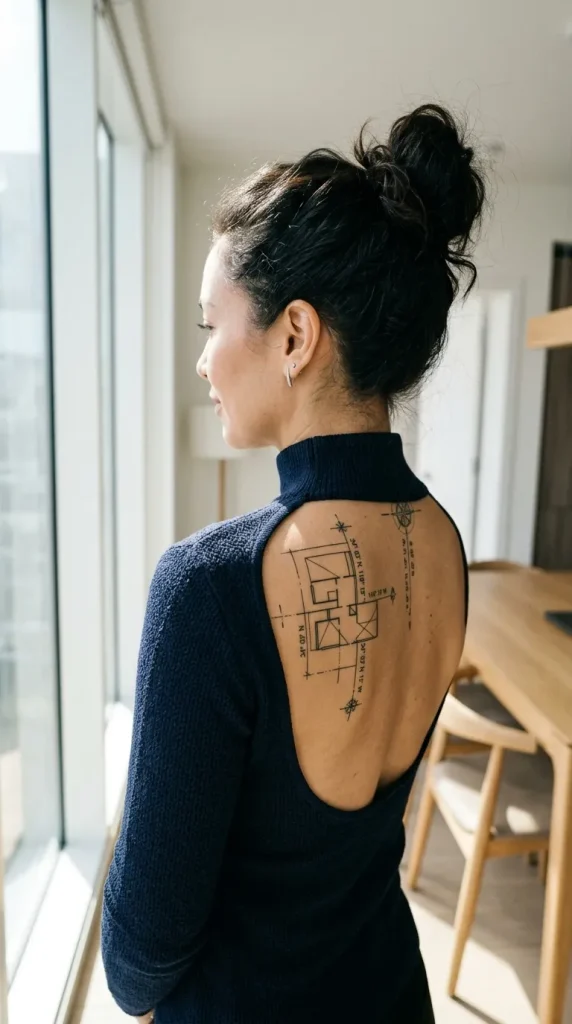
10. Architectural Linework & Coordinates
This modern approach utilizes sharp, technical drafting lines, clean architectural blueprints, or precise geographic coordinates pointing to a life-changing location, running vertically down the back of the shoulder.
- Who It Suits Best: Travelers, engineers, and minimalists who find beauty in clean data, structure, and sharp, graphic design.
- Design & Placement Tips: The line weights must remain perfectly uniform. Use a steady-handed artist who specializes in crisp linework to keep the numbers and lines perfectly straight.
- Key Benefits: It looks exceptionally modern, has a very clean aesthetic, and carries a unique, personalized meaning that reads like an intentional piece of graphic design.
Pro Tip: The Strap Friction Hazard
During the first 10 to 14 days of the healing process, friction is your tattoo’s worst enemy. A healing shoulder tattoo can easily be irritated, scoured, or damaged by tight bra straps, heavy backpack loops, or tight purse straps rubbing against the raw skin. Plan to wear loose tank tops, strapless tops, or soft cotton shirts during the initial two weeks to protect your investment.
Critical Mistakes to Avoid with Your Shoulder Tattoo
- Neglecting Your Posture During Stencil Placement: Never slouch or actively pull your shoulders back when your artist applies the carbon stencil. Stand completely relaxed with your arms hanging naturally at your sides to guarantee the design sits correctly during everyday movement.
- Forgetting Daily Sun Protection: Your shoulders catch the highest amount of direct vertical sunlight throughout the summer. UV rays break down tattoo pigments faster than anything else. Once fully healed, always apply a broad-spectrum SPF 50 sunscreen to keep your lines crisp.
- Picking at the Peeling Skin: As your shoulder ink heals, it will naturally flake and peel like a mild sunburn. Never pull or scratch at these flakes, as doing so can pull the ink straight out of the deeper dermis layer, leaving permanent blank spots in your design.
- Rushing the Healing Apparel: Wearing rough, synthetic, or incredibly tight clothing over a fresh shoulder piece traps sweat and bacteria, which can cause infection or lead to heavy scabbing that ruins fine linework.
Frequently Asked Questions
How painful is a shoulder tattoo compared to other body placements?
In general, the outer shoulder and shoulder cap area are considered some of the least painful places on the body to get tattooed. The skin is thicker and there are fewer nerve endings compared to other areas. However, if your design extends inward toward the collarbone or down into the armpit crease, the pain level will increase significantly due to the thinner skin and underlying bone structure.
How long does a shoulder tattoo take to heal completely?
The surface layer of your skin will typically look and feel healed within 2 to 3 weeks, which is when the flaking and peeling phase stops. However, the deeper layers of the dermis take up to 4 to 6 months to fully rebuild and lock the ink pigment in place permanently.
Can I exercise or lift weights immediately after getting a shoulder tattoo?
It is highly recommended to take a break from heavy upper-body workouts for at least 4 to 7 days after getting inked. Exercises like shoulder presses or chest flyes stretch the skin significantly, which can split open scabs, distort the fresh healing lines, and introduce bacteria from gym equipment via your sweat.
Crafting Your Unique Story
Choosing the right shoulder tattoo comes down to finding an artist whose style matches your vision and designing a piece that fits the natural curves of your body. Whether you choose an elegant fine-line floral wrap, a bold geometric mandala, or personal coordinates, your new ink is a beautiful form of self-expression.
Take your time researching artists, invest in proper aftercare, and enjoy the process of turning your skin into a custom piece of art.